Articles
A list of articles by Shaun Yap
There is nothing more deceptive than an obvious fact.
– Sherlock Holmes, “The Adventures of Sherlock Holmes, The Boscombe Valley Mystery”
A list of articles by Shaun Yap
There is nothing more deceptive than an obvious fact.
– Sherlock Holmes, “The Adventures of Sherlock Holmes, The Boscombe Valley Mystery”
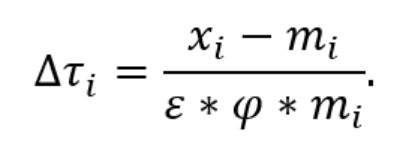
On April 2, 2025, President Donald Trump declared ‘Liberation Day’, unveiling aggressive new tariffs designed to correct trade imbalances via a controversial formula from the U.S. Trade Representative (USTR). This tariff equation, which aims to achieve a bilateral trade balance of zero, adjusts rates based on export-import disparities, elasticity of demand, and tariff passthrough. This article focuses on explaining the Trump Tariff formula to all with worked examples and offering Python tools to replicate and validate the data.
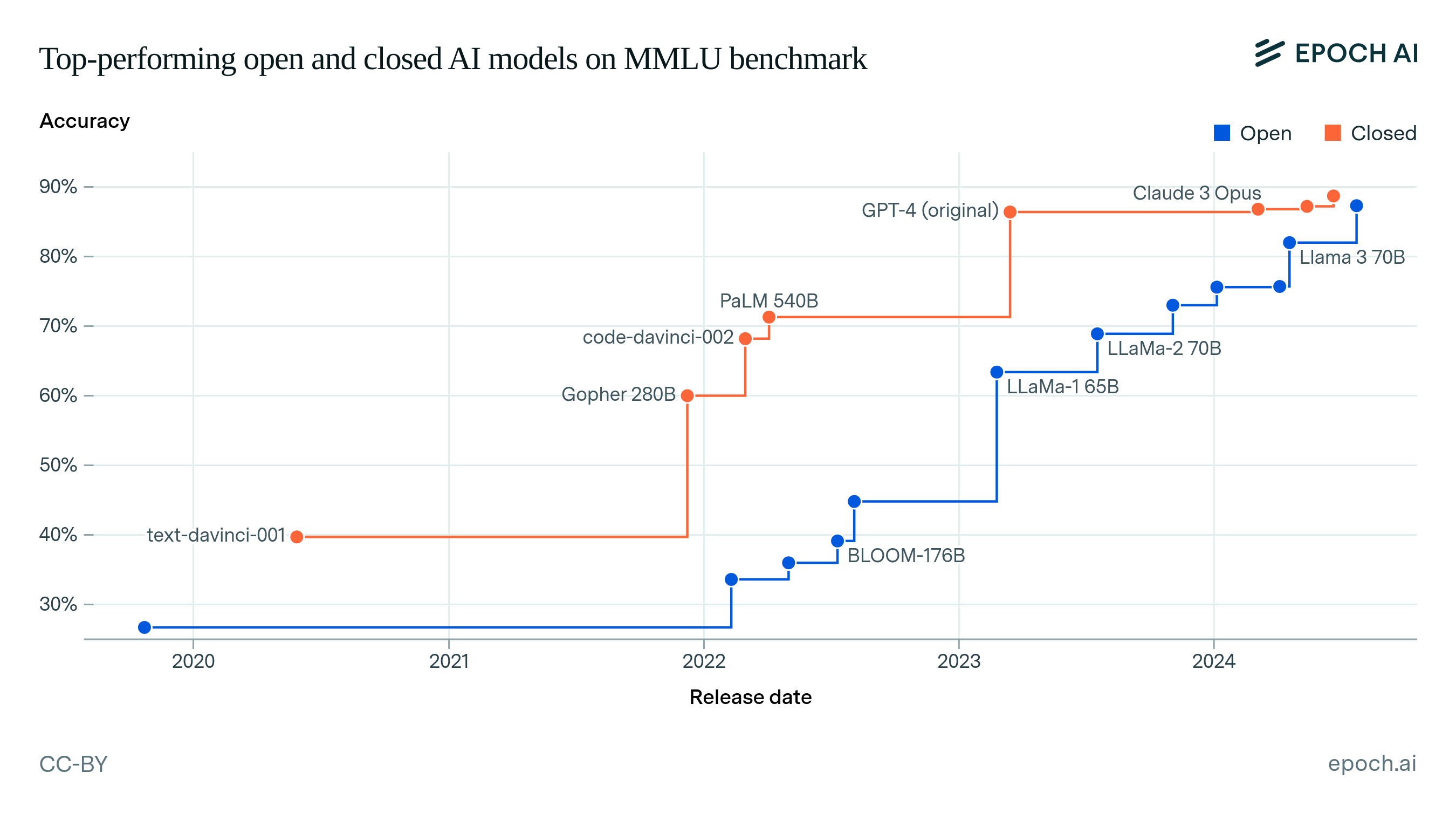
Generative AI has surged in capability by training massive models on colossal datasets - think OpenAI’s GPT series for text, DALL-E for images, and GitHub Copilot for code. However, new evidence suggests these size-driven improvements may be approaching a plateau, yielding smaller gains despite bigger models. Rather than straightforwardly scaling up further, the AI field is witnessing diminishing returns, prompting a search for new strategies beyond raw brute force. Techniques like retrieval-augmented generation and more efficient architectures are taking center stage, while multimodal and collaborative approaches promise novel breakthroughs. Beyond technical constraints, the sustainability and ethics of giant AI models are in sharp focus. High energy use, concentrated model ownership, and alignment challenges underscore the need for more responsible innovation. All told, generative AI continues to expand its reach, but optimising its potential without relying solely on unsustainable scaling has become the key puzzle for researchers, policymakers, and developers.
As deepfake technology becomes increasingly realistic and accessible, the risks it poses to individuals, institutions, and democratic society are growing exponentially. This essay offers a multifaceted response to the challenge, arguing that no single solution is sufficient. It explores the need for regulation of AI tools, automatic self-certification of synthetic media, and the role of governments and platforms in detecting and labelling harmful content. It also emphasises the importance of public education in fostering a ‘zero-trust’ mindset, particularly in political and official contexts where authenticity is critical. Balancing freedom of expression with public safety, the essay calls for swift, coordinated action to protect digital integrity in the face of rapidly advancing synthetic media.
We critically investigate whether Bitcoin - and by extension, other cryptocurrencies - can evolve into widely accepted everyday-use currencies. Using the US dollar as a benchmark, it evaluates key characteristics such as stability, divisibility, transaction efficiency, and regulatory compatibility. Drawing from real-world case studies like the Mt. Gox Heist and the Bangladesh Bank Heist, the piece highlishgts security concerns, value volatility, and the tension between decentralisation and the regulatory oversight needed for monetary policy. Ultimately, the articles proposes that for crypto to become mainstream, it must transform into a permissioned, central-bank-backed stablecoin - a ‘cryptodollar’ - that offers speed, trust, and compliance without sacrificing the innovation at the heart of digital money.